
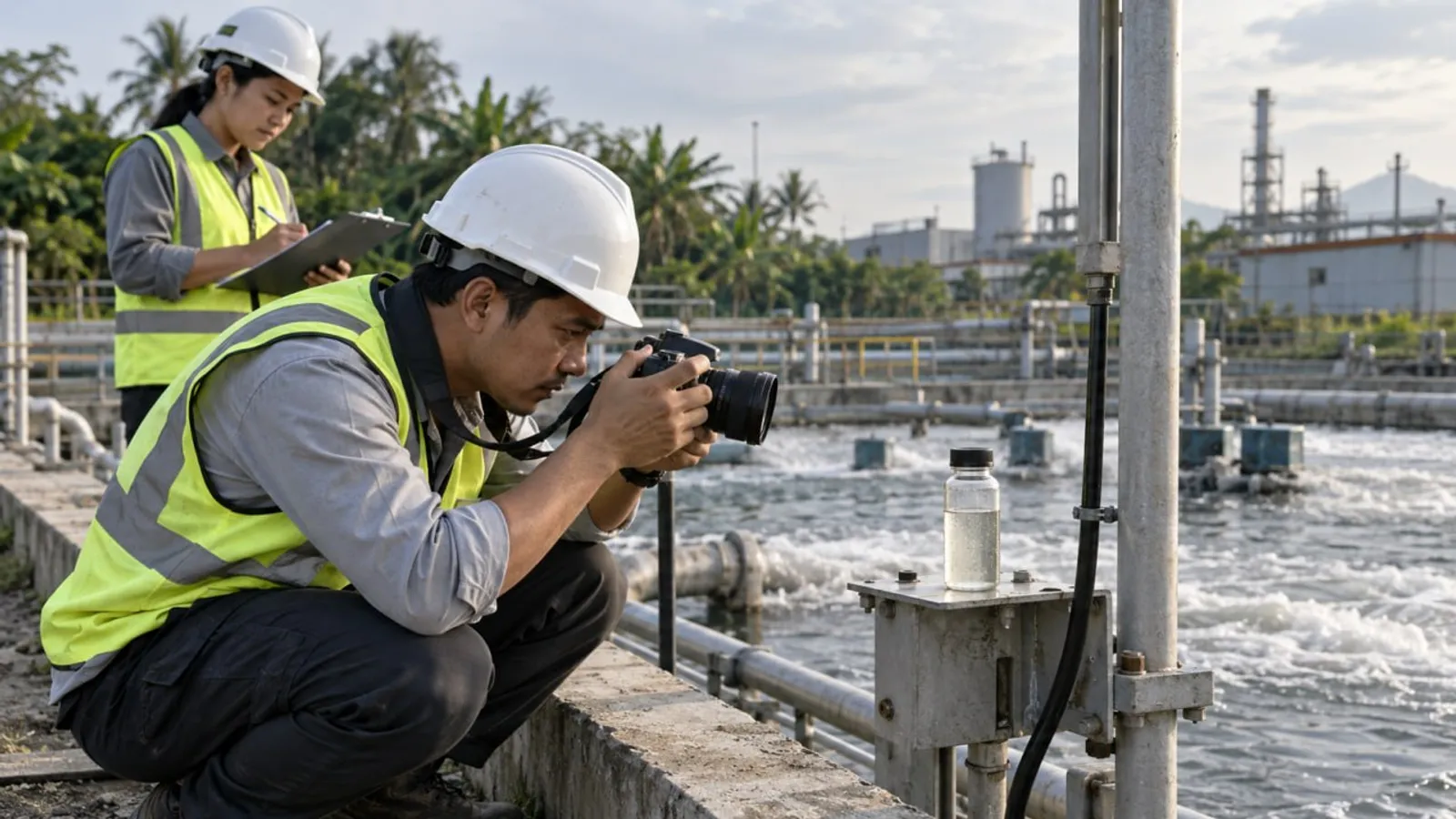
Visual Documentation: More Than Just a Formality
When an audit team or environmental inspector arrives at your business site, one of the first things they ask for is supporting evidence. That evidence is not always in the form of figures or written documents. Photographs, videos, and other visual documentation are often key to convincing assessors that on-site conditions match the reports you have submitted.
Unfortunately, many business operators overlook the importance of this documentation. When an RKL-RPL report or audit document is required to be supplemented with visual evidence, they only then realize that photos of the wastewater treatment plant (WWTP) condition, emission monitoring points, or hazardous waste (B3) storage areas are unavailable. Without adequate documentation, your report may be considered weak or may even fail to meet expected standards.
The Role of Visual Documentation in Environmental Reporting
Visual documentation serves as an audit trail. This means that photos or videos become objective records showing actual conditions at a given time. Its main functions include:
- Proof of compliance: Demonstrating that waste treatment infrastructure, such as the WWTP, operates in accordance with its design and permits.
- Verification tool: Making it easier for consultants or auditors to compare written data with field conditions.
- Historical documentation: Serving as an archive to track environmental management progress over time.
- Communication support: Helping explain technical conditions to parties not present on site, such as central management or relevant agencies.
Critical Areas Often Overlooked in Documentation
In field practice, the ERI team frequently encounters areas with minimal or even no documentation at all. Some of these include:
1. Existing Condition of the WWTP and Waste Infrastructure
Photos of WWTP buildings, aeration units, settling tanks, and final discharge points are often poorly documented. Yet these are the primary evidence that the treatment system is actually operating. Photos should be taken from various angles and include details such as water conditions at the inlet and outlet.
2. Hazardous Waste (B3) Storage
Temporary hazardous waste storage areas are subject to strict technical regulations, from symbols and labels to impermeable flooring conditions. Visual documentation in this area is essential evidence that storage complies with the approved Technical Specifications for Hazardous Waste.
3. Emission and Air Quality Monitoring Points
If your business has a stack or other emission source, photos of sampling points and sampling activities are highly valuable. They demonstrate that monitoring is conducted at the correct locations and in accordance with procedures.
4. RKL-RPL Monitoring and Reporting Activities
When your team collects wastewater samples, measures noise levels, or conducts routine inspections, document the process. Photos of these activities strengthen the reports you submit to environmental agencies.
The Impact of Inadequate Documentation on Compliance
Without visual documentation, your reports are vulnerable to being considered difficult to verify. In some cases, audit or supervisory assessments may require additional clarification, costing time and effort. In the context of PROPER assistance, completeness of visual evidence is even one of the aspects influencing the assessment of a company's environmental management performance.
Furthermore, inadequate documentation makes it difficult for consultants like ERI to provide appropriate recommendations. Without visual conditions, analysis of WWTP effectiveness or waste storage compliance becomes limited.
Good Practices for Visual Documentation
To ensure your visual documentation is useful, pay attention to the following:
- Be consistent: Take photos at the same period each month, for example during routine monitoring.
- Add time and location markers: Use a camera that embeds date and coordinate metadata, or record them manually in a separate file.
- Take photos from informative angles: Ensure the main object is clearly visible, including relevant unit nameplates or labels.
- Store neatly: Use a folder structure based on month, location, or type of activity so files are easy to find when needed.
- Include a scale or reference: If possible, use a ruler or comparison object to indicate size, especially for damage or sediment.
When Should You Consult an Expert?
Each type of business has different documentation needs, depending on the environmental documents it holds, whether AMDAL, UKL-UPL, or SPPL. If you feel that visual documentation at your company is still disorganized or are unsure which areas must be documented, you should promptly consult an expert team.
The PT Enviro Resources Indonesia (ERI) team is ready to help you evaluate the completeness of environmental documentation, develop a practical filing system, and ensure your reports meet applicable standards. With proper assistance, the risk of reports being deemed incomplete can be minimized. Contact ERI for further consultation regarding your business's environmental documentation and reporting needs.